Author: 982404pwpadmin

  • Dr. Pimple Popper star rushed to hospital after suffering stroke while filming

    Dr. Pimple Popper star rushed to hospital after suffering stroke while filming

    Sandra Lee, widely known from the TV show Dr. Pimple Popper, has shared details about a serious health scare after suffering a stroke while filming her spin-off series, Dr. Pimple Popper: Breaking Out.

    She explained that the incident began with symptoms she initially dismissed as a hot flash.

    While on set, she suddenly felt extremely sweaty and unwell. After returning to her parents’ home, her condition worsened.

    ‘I just felt very restless. In one leg I kept feeling shooting pains,’ she told People.

    She started having trouble walking, and noticed weakness on the left side of her body.

    ”I would hold my hand out, and it would just slowly collapse. I noticed that I had a tough time articulating and just enunciating,” she said.

    ”I thought, “Am I having a stroke?””

    A huge shock

    Realizing something was very wrong, she went to the hospital, where doctors confirmed she had suffered an ischemic stroke – a condition where blood flow to part of the brain is blocked, causing brain cells to die.

    ”It was just a shock. As a physician I couldn’t deny that I had slurred speech, that I was having weakness on one side, but I was like, “Well, this is a dream, right?” she said.

    ”What essentially happened is I had a part of my brain that died.”

    The experience forced Sandra to pause filming for about two months while she focused on recovery. During that time, she underwent physical therapy to regain basic motor skills. She admitted the ordeal was frightening and left her dealing with some lingering emotional stress, especially since it happened during filming

    Despite the challenges, the Dr. Pimple Popper star has since returned to work and says she feels mostly back to normal. However, the incident has made her more mindful of her health, especially managing stress, blood pressure, and cholesterol, all of which are key risk factors for stroke.

    Lee, 55, who signed with TLC in 2018 to have her own series, is now using her platform to raise awareness, encouraging people to take stroke symptoms seriously and seek immediate medical help.

    She also highlighted that in some cultures, strokes are not openly discussed, and she hopes to help change that by speaking out.

    Key stroke warning signs to remember (FAST):

    • Face: Drooping on one side
    • Arms: Weakness or inability to lift both arms
    • Speech: Slurred or confused speech
    • Time: Act quickly and seek emergency care

    Her message is clear: recognizing symptoms early and acting fast can save lives and reduce long-term damage.

  • KFC Redefines the Meaning of Always Open by Removing Restaurant Doors, Transforming Entrances into Bold Advertising Statements

    KFC’s decision to remove doors from select 24/7 locations is less a stunt and more a bold visual statement about constant availability. Doors traditionally symbolize opening and closing, so removing them reinforces the idea that the restaurant never shuts. Instead of relying on signs or slogans, KFC turns architecture into messaging. In a crowded advertising landscape, the absence of doors becomes a powerful and instantly understandable symbol of round-the-clock service.

    The campaign, called “Out-Door,” cleverly repurposes the removed doors as outdoor displays with playful messaging. Rather than discarding them, KFC transforms them into storytelling tools that explain the concept with humor and confidence. This subtraction-based marketing approach feels fresh and memorable because it disrupts expectations without overwhelming audiences with more visual clutter.

    A digital layer adds practicality to the creativity. QR codes placed on the repurposed doors guide customers to nearby open locations, especially useful during late hours. This blend of physical innovation and mobile convenience ensures the idea is not just symbolic but functional. It reflects how modern campaigns must connect real-world experiences with digital behavior.

    Beyond its novelty, the campaign aligns KFC’s physical spaces with today’s always-on culture. In a world where streaming, shopping, and delivery services never close, the doorless restaurant mirrors that sense of permanence. Simple, humorous, and visually striking, the concept reinforces KFC’s brand identity while proving that sometimes removing a barrier makes the strongest statement.

  • Promising Teen Athlete Remembered After Fatal Accident Near Home

    Promising Teen Athlete Remembered After Fatal Accident Near Home

    A quiet community in northern Italy is mourning after a road accident claimed the life of a young student. What began as an ordinary morning quickly turned into tragedy when she was involved in a collision near a local crosswalk while on her way to school. Emergency services arrived promptly and worked urgently at the scene, but despite their efforts, she could not be saved. The incident has left residents in shock and raised concern about pedestrian safety in busy road areas.

    Local authorities have confirmed that an investigation is underway to understand the circumstances surrounding the accident. Early reports indicate that visibility, traffic timing, and witness statements are being reviewed. Officials have stressed that it is too early to draw conclusions and are urging the public to avoid speculation while the inquiry continues.

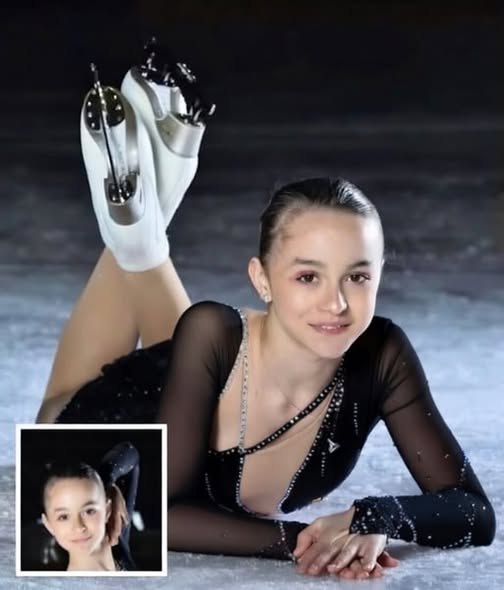
    The young victim has been identified as Matilda Ferrari, a 15-year-old figure skating talent known for her discipline and dedication. Coaches and teammates remember her as someone who trained consistently and approached every performance with determination. Outside of skating, she was described as kind, hardworking, and supportive of her peers, balancing school and athletics with maturity beyond her years.

    In the days following the tragedy, the Val Rendena community has come together to support her family and honor her memory. Schools have offered counseling services, and residents have placed flowers near the site of the accident. While investigations continue, the focus remains on remembrance, unity, and ensuring her story is remembered for the positive impact she had on those around her.

  • Trump faces backlash from religious right after posting AI image of himself as ‘Jesus’

    Trump faces backlash from religious right after posting AI image of himself as ‘Jesus’

    Donald Trump is facing an unusual wave of criticism from within his own conservative and religious support base after posting an AI-generated image depicting himself in a Christ-like role.

    That act that has triggered accusations of blasphemy and “sacrilegious” behavior.

    The controversy erupted shortly after Trump launched a late-night social media attack on Pope Leo XIV, calling him “WEAK” on crime and “terrible” on foreign policy, while also sharing the striking AI image on Truth Social.

    The illustration showed Trump dressed in flowing robes, placing a glowing hand on a man in a hospital bed, with surrounding figures appearing in reverence, an image many say closely mirrors traditional depictions of Jesus healing the sick.

    He is shown in a position of authority and higher power, placing his hand on the head of an unwell elderly man lying in a hospital bed, as if healing him.

    Around him are nurses, veterans, and soldiers, all appearing to witness the moment. The background includes strongly patriotic imagery such as the American flag, the Statue of Liberty, the Lincoln Memorial, and a soaring eagle.

    Elsewhere in the scene, warplanes are visible in the sky, along with what appear to be figures emerging from clouds, while fireworks burst overhead.

    Some social media users suggested Trump looked like he was healing “a young Jeffrey Epstein,” although this is not confirmed or clearly identifiable. Others criticized the image more bluntly, calling it “some blasphemous bulls***.”

    The post immediately drew backlash, not just from critics on the left, but from prominent voices within the religious right and conservative Christian circles, many of whom are usually among Trump’s strongest supporters.

    One commenter wrote, according to The Washington Post:

    “Trump is quite obviously against the Pope as he feels challenged and confronted by Pope Leo’s responses to the disrespectful attacks on the Catholic Church… His childishness and puerile behaviour is unseemly…”

    Others went further, accusing the president of crossing a spiritual line. Conservative Christian writer Megan Basham described the image as:

    “OUTRAGEOUS blasphemy… he needs to take this down immediately and ask for forgiveness from the American people and then from God.”

    ”Disgusting and unacceptable”

    Catholic podcaster Isabel Brown also condemned the post, calling it:

    “disgusting and unacceptable, but also a profound misreading of the American people experiencing a true and beautiful revival of faith in Christ…”

    Michael Knowles, a conservative Catholic commentator, added that it:

    “behooves the President both spiritually and politically to delete the picture, no matter the intent.”

    Riley Gaines, a conservative activist and former athlete with 1,6 million followers on X, and who has spoken at Trump rallies, also questioned the message behind the post:

    “I cannot understand why he’d post this. Is he looking for a response? Does he actually think this? Either way, two things are true… a little humility would serve him well and God shall not be mocked.”

    Did Trump went too far?

    The backlash comes amid a growing pattern of Trump sharing AI-generated or highly stylized images of himself in symbolic or exaggerated roles.

    Critics say the latest post pushes that trend further by introducing explicitly religious imagery at a politically sensitive moment.

    A White House official, speaking anonymously to The Washington Post, suggested the outrage may fade quickly, as it has in previous controversies. But the official also said it went too far for Trump to post such an image of himself, even though some of his most loyal MAGA supporters have often portrayed him in quasi-messianic terms.

    “Other people at these Trump rallies do it for him, but when you do it yourself, … it’s sacrilegious at best,” the official said.

  • I was six months pregnant when my sister-in-law locked me out on the balcony in the freezing cold and said, “Maybe a little suffering will toughen you up.

    I was six months pregnant when my sister-in-law locked me out on the balcony in the freezing cold and said, “Maybe a little suffering will toughen you up.

    I was twenty-eight weeks pregnant when my sister-in-law locked me out on the balcony and left me there in the cold.

    Her name was Melissa, and from the moment I married her brother, she acted like I had taken something from her. She criticized everything—my cooking, my clothes, the way I spoke, even how I laughed. When I became pregnant, it only intensified. She called me “lazy,” “dramatic,” and accused me of “milking” every symptom for attention. My husband, Ryan, knew she could be harsh, but he kept telling me to ignore it because “that’s just how Melissa is.”

    That Thanksgiving weekend, Ryan’s family came to our apartment for dinner since his mother’s kitchen was under renovation. I had spent the entire day cooking, even though my back hurt and my feet were swollen. Melissa showed up late, looked around at everything I’d done, and smirked.

    “Wow,” she said, tossing her purse onto the counter. “You actually managed to stand long enough to make a meal. That’s impressive.”

    I tried to brush it off, but I was already exhausted. After dinner, while Ryan and his father took the trash down, Melissa followed me into the kitchen as I stacked plates.

    “You missed a spot,” she said, pointing at the stove.

    “I’ll get it,” I replied quietly.

    She crossed her arms. “You know, women in this family don’t act helpless every time they get pregnant.”

    I turned toward her. “I’m not acting helpless. I’m tired.”

    Melissa laughed under her breath. “Tired? You’ve been using that excuse for months.”

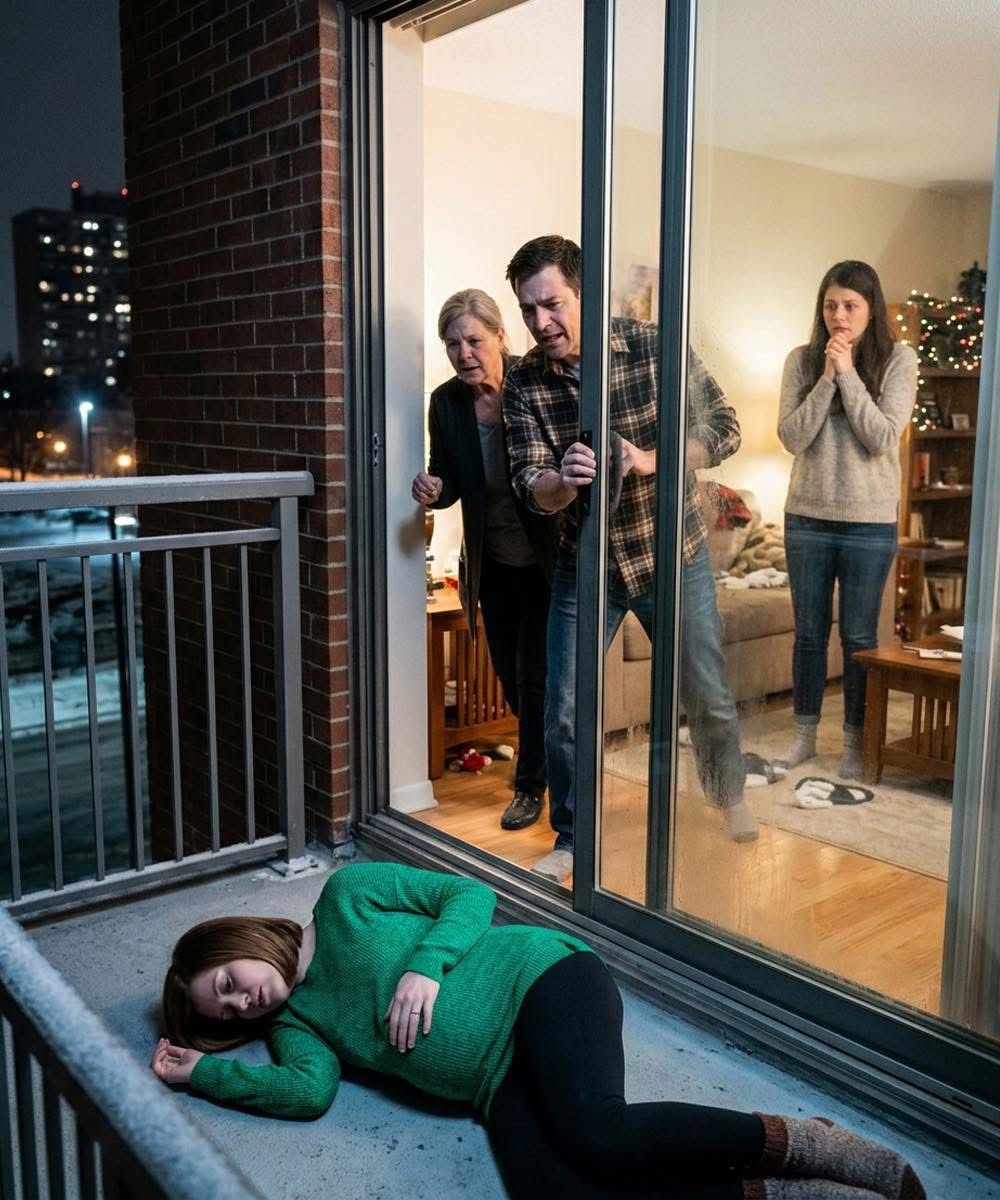
    I didn’t want to argue, so I picked up a tray and stepped onto the balcony to grab the extra soda bottles we had chilling in the cold. The moment I stepped outside, the sliding door slammed shut behind me.

    Then I heard the click.

    At first, I thought it was an accident. I pulled on the handle. It wouldn’t budge. Melissa stood on the other side of the glass, arms folded, watching me.

    “Melissa!” I shouted. “Open the door!”

    She leaned closer and said through the glass, “Maybe a little discomfort will teach you to stop being so weak.”

    My stomach dropped. “Are you insane? I’m pregnant!”

    She rolled her eyes. “It’s just a few minutes.”

    The cold air cut straight through my thin sweater. I started pounding on the glass. “Open it now!”

    But Melissa simply walked away.

    The wind picked up. My fingers went numb first, then my feet. I kept banging, shouting, crying for Ryan, but music was playing inside and dishes were clattering. Minutes stretched endlessly. My belly tightened painfully, and fear began to claw its way up my throat.

    Then a sharp cramp hit low in my abdomen, stronger than anything before, and my knees nearly gave out.

    Part 2

    I don’t know how long I was out there. Ten minutes? Twenty? Maybe longer. In the cold, time lost all meaning. All I knew was my hands had stopped hurting because I could barely feel them anymore, which scared me more than the pain had. My breath came out in weak bursts, and each cramp in my stomach felt tighter than the last.

    I kept thinking about the baby.

    I placed both hands over my belly and whispered, “Please, please be okay.” But my voice trembled so much I could hardly hear it.

    I pounded on the glass again, weaker this time. Inside, the apartment looked warm and bright, full of movement, completely disconnected from what was happening just a few feet away. I saw Ryan’s mother carrying dishes. I heard laughter through the glass. At one point, I saw Melissa walk past the door without even glancing at me.

    That’s when I realized this wasn’t a joke to her. It wasn’t an accident. She knew I was out there. She was choosing to leave me.

    My teeth chattered so hard it hurt. My legs felt heavy and unsteady, and another cramp twisted through my lower abdomen, this one so sharp I cried out. I banged again with both fists, panic taking over. “Ryan!” I screamed. “Ryan, help me!”

    I must have finally been loud enough, or someone noticed movement, because Ryan’s mother turned toward the balcony. Her face changed instantly. She dropped the dish towel and rushed to the door, pulling at the handle.

    It didn’t open.

    “Melissa!” she shouted. “Why is this locked?”

    Melissa appeared from the hallway, suddenly pale. “I—she just stepped out there. I didn’t think—”

    Ryan rushed in right behind his father, saw me slumped against the railing, and went white. “Open the door!”

    Melissa fumbled with the lock, her hands shaking now. By the time the door slid open, I couldn’t stand anymore. I tried to step forward, but the room spun violently. Ryan caught me as my knees gave out.

    “Emma! Stay with me!” he shouted.

    His voice sounded distant. I remember his mother touching my freezing hands and gasping. I remember Melissa repeating, “I didn’t know it was that bad,” over and over as if that changed anything.

    Then I looked down and saw a damp stain spreading across the front of my leggings.

    For one horrifying second, no one moved.

    Ryan followed my gaze and froze. “Is that blood?”

    His mother started crying. Melissa backed into the wall. Then the pain hit again—deep, brutal, tearing—and I heard myself scream as Ryan grabbed his phone and called for an ambulance.

    At the hospital, everything became bright lights, monitors, nurses, rapid questions. How long had I been exposed to the cold? How far along was I? Had I felt contractions before? I answered between breaths while Ryan stood beside me, shaking so badly he could barely hold my bag.

    Then the doctor looked up and said clearly, “She’s showing signs of preterm labor.”

    Part 3

    The words hit the room like an explosion.

    Preterm labor. Twenty-eight weeks. Too early—far too early. A cold spread through my body that had nothing to do with the balcony anymore. Nurses moved quickly, attaching monitors, starting IV fluids, giving medication to slow the contractions. One explained they were also giving steroids to help the baby’s lungs in case the labor couldn’t be stopped. I nodded as if I understood, but inside I was unraveling.

    Ryan never let go of my hand.

    “I’m so sorry,” he kept repeating, his voice breaking. “Emma, I’m so sorry.”

    At first, I was too afraid to process his apology. I focused on the monitor, on every tightening in my belly, on every glance between the nurses. But when his mother appeared at the doorway with tears streaming down her face—and Melissa nowhere behind her—the anger finally settled somewhere.

    “She did this,” I whispered.

    Ryan closed his eyes. “I know.”

    And everything changed.

    For years, Ryan had minimized Melissa’s cruelty because it was easier than confronting it. Sarcastic remarks, public humiliation, small controlling behaviors—he always had an excuse. She was stressed. She didn’t mean it. She crossed the line sometimes, but she was still family. Lying in that hospital bed, with medication flowing into my arm and our baby fighting to stay safe, I watched my husband finally understand what his silence had cost.

    By morning, the contractions had slowed. Not completely gone, but enough for the doctors to feel cautiously hopeful. I was admitted for observation for several days, each hour fragile. When they finally told me the baby’s heartbeat was stable and labor had been delayed, I cried so hard the nurse had to hand me tissues.

    Melissa tried to come to the hospital that afternoon.

    Ryan met her in the hallway before she reached my room. I didn’t hear everything, but I heard enough. She was crying, saying she didn’t realize the cold was dangerous, that she only meant to “teach me a lesson,” that everyone was overreacting.

    Then Ryan’s voice—sharper than I had ever heard it: “You locked my pregnant wife outside in freezing weather. She is in preterm labor because of you. You do not get to call that a lesson.”

    His mother told Melissa to leave. His father, who had defended her all his life, stood there silent and ashamed. And Ryan said something I never expected:

    “If Emma and this baby make it through this safely, it won’t be because of luck. It’ll be because doctors intervened before your cruelty destroyed something you can never replace. Stay away from us.”

    Melissa left. Later, Ryan told me he had also given a statement when hospital staff asked what happened, since they were concerned about intentional harm. I didn’t stop him. Some lines, once crossed, should have consequences.

    Our daughter, Lily, was born six weeks early but strong enough to survive with a short NICU stay. The first time I held her—so tiny, so fierce, so warm against my chest—I made a promise: no one who endangered her would ever be allowed close enough to do it again.

    Melissa sent texts, emails, flowers, long dramatic apologies. None of them changed the truth. Family is not an excuse for abuse. Love does not justify cruelty. And protecting peace should never come at the cost of protecting yourself.

    So if you’ve ever had someone dismiss dangerous behavior because “that’s just how family is,” don’t ignore that warning in your gut. Boundaries don’t just protect feelings—they can save lives. And tell me honestly: if you were in my place, would you ever forgive her?


  • A Tragic Honeymoon Case Understanding the Investigation, Legal Process, and Lessons on Trust

    A Tragic Honeymoon Case Understanding the Investigation, Legal Process, and Lessons on Trust

    In recent years, certain criminal cases have captured widespread public attention not only because of their severity but also due to the complex human and social dynamics involved. One such case from India has drawn significant interest, as it highlights the intersection of trust, relationships, and the legal system.

    What began as a newly married couple’s journey to celebrate their union soon became the subject of a major criminal investigation. The case has since prompted discussions about personal relationships, the role of evidence in modern policing, and the importance of due process.

    This article presents a carefully structured and AdSense-compliant overview of the case, focusing on verified developments, investigative procedures, and broader societal implications, while avoiding speculation or unnecessary detail.

    The Beginning: A Trip That Raised Concerns
    According to reports, businessman Raja Raghuvanshi traveled with his wife, Sonam Raghuvanshi, to Shillong shortly after their wedding. The trip was intended to mark the beginning of their married life, a time traditionally associated with celebration and new beginnings.

    However, within days of their arrival, concerns began to emerge when Raja was reported missing. The unexpected disappearance prompted local authorities to initiate a search and investigation, focusing on tracing his last known movements.

    Discovery and Initial Investigation
    After a period of searching, authorities located Raja’s remains in a remote area outside the city. This discovery marked a turning point in the case, shifting it from a missing persons inquiry to a criminal investigation.

    Law enforcement officials began gathering evidence, including physical findings from the location, witness statements, and digital records. As is standard in such cases, investigators worked to establish a timeline of events leading up to the incident.

    Early lines of inquiry explored multiple possibilities, including the involvement of individuals known to the couple. At this stage, investigators avoided drawing conclusions, focusing instead on collecting verifiable information.

    The Role of Digital Evidence
    One of the most significant aspects of the investigation was the use of digital data. Modern law enforcement increasingly relies on technology to reconstruct events, and this case was no exception.

    Authorities analyzed:

    Call records
    Location data from mobile devices
    Messaging activity
    These digital footprints provided critical insights into movements, communications, and potential connections between individuals involved in the case.

    Over time, patterns began to emerge, allowing investigators to refine their understanding of what may have occurred. This process illustrates how technological tools have become essential in contemporary criminal investigations.

    Identification of Suspects
    As the investigation progressed, several individuals came under scrutiny. Among them were Vishal Singh, Anand Kurmi, and Akash Rajput, who were alleged to have played roles in the events under investigation.

    Authorities examined potential connections between these individuals and the primary parties involved. Their inquiry focused on establishing whether there was coordination, communication, or prior planning.

    It is important to note that in any legal case, allegations must be tested through the judicial process. Investigative findings are subject to verification in court, where evidence is evaluated and legal standards are applied.

    Legal Developments
    On June 8, law enforcement officials arrested Sonam Raghuvanshi in connection with the case. According to authorities, the arrest followed the accumulation of evidence linking her to the investigation.

    During questioning, statements were reportedly recorded, forming part of the broader evidentiary record. As with all legal proceedings, such statements are subject to scrutiny and must be considered within the framework of applicable laws.

    The case is currently moving through the legal system, where courts will determine outcomes based on evidence, arguments from both prosecution and defense, and established legal principles.

    Understanding the Legal Process
    Cases of this nature involve multiple stages, including:

    Investigation – Collection of evidence and identification of potential suspects
    Arrest and Charges – Formal legal action based on preliminary findings
    Trial Proceedings – Presentation of evidence in court
    Judgment – Final determination by the judiciary
    Each stage is governed by legal safeguards designed to ensure fairness and accuracy. These safeguards include the presumption of innocence, the right to legal representation, and the requirement that guilt be proven beyond reasonable doubt.

    Public Reaction and Media Coverage
    The case has generated significant public interest across India. Media coverage has highlighted various aspects of the investigation, including the role of technology, the complexity of relationships, and the legal proceedings.

    Public reactions have varied, reflecting a range of perspectives. Some individuals have focused on the emotional impact of the case, while others have emphasized the importance of allowing the legal process to unfold without prejudice.

    Responsible reporting plays a crucial role in such situations, ensuring that information is presented accurately and without unnecessary sensationalism.

    The Human Impact
    Beyond legal and procedural aspects, the case has had a profound impact on those directly affected. The loss of a family member is a deeply personal and difficult experience, and such घटनाएँ often leave lasting emotional effects.

    Families, friends, and communities must navigate grief while also dealing with the complexities of ongoing legal proceedings. Support systems, both personal and institutional, play an important role during this time.

    Recognizing the human dimension of such cases helps maintain a balanced perspective, ensuring that discussions remain respectful and empathetic.

    Broader Social Reflections
    While individual cases are unique, they can also prompt broader discussions about social issues. In this instance, topics such as trust, communication, and the dynamics of personal relationships have been widely discussed.

    It is important, however, to approach these discussions with care. Isolated incidents should not be used to generalize about relationships or individuals. Instead, they can serve as reminders of the importance of awareness, communication, and mutual respect.

    The Importance of Evidence-Based Conclusions
    One of the key lessons from this case is the importance of relying on evidence rather than assumptions. Initial impressions or early reports may not always reflect the full picture.

    Through careful investigation, authorities aim to establish facts that can be presented in court. This process helps ensure that conclusions are based on verifiable information rather than speculation.

    For the public, this underscores the value of patience and critical thinking when following complex legal cases.

    Moving Forward
    As the case continues, further developments are expected as evidence is examined and legal arguments are presented. The outcome will depend on judicial proceedings and adherence to legal standards.

    Observers, including legal experts and the general public, will continue to follow the case with interest, recognizing its significance within the broader context of law and society.

    Conclusion
    The case involving Raja Raghuvanshi and Sonam Raghuvanshi serves as a reminder of the complexities that can arise in both personal relationships and legal investigations.

    While the circumstances are deeply serious, the focus remains on ensuring that the legal process is followed with integrity and fairness. Through careful investigation, evidence-based analysis, and judicial oversight, the system seeks to arrive at a just outcome.

    Ultimately, this case highlights the importance of trust, accountability, and the rule of law. It also reinforces the need for responsible discussion and respectful consideration when addressing sensitive topics.

    As developments continue, the emphasis remains on clarity, fairness, and adherence to legal principles—ensuring that justice is pursued in a manner that reflects both societal values and the rule of law.

  • Rest in peace after father to

    Rest in peace after father to

    Julia Roberts walks onto that Oklahoma set and

    kills the “America’s Sweetheart” fantasy in a single, brutal performance.

    No gloss. No safety net.

    Just a woman unraveling in real time.

    At the dock. At the dinner table.

    What makes Julia Roberts’s work in August: Osage County so startling isn’t just the absence of glamour;

    it’s the sense that she is actively dismantling the very image that made her a star.

    As Barbara Weston, she moves like someone whose nerves are permanently exposed, every gesture edged with exhaustion, fury, and a love so damaged it can barely breathe.

    The casual jeans, the limp hair, the drained face aren’t costume choices so much as confessions:

    this is what happens when a woman has been strong for too long, for too many people, in a house that keeps swallowing her whole.

    Within that suffocating world, the dockside identification and the vicious family showdowns become less “big scenes” and more emotional autopsies.

    Roberts lets us see the moment Barbara realizes she is becoming the mother she despises, and the terror of that recognition.

    Yet in the cracks—shared laughter off set, flickers of dark humor on screen—there’s a stubborn, ordinary hope.

    Her transformation doesn’t just deepen one character; it redefines what aging, femininity, and honesty are allowed to look like in American cinema.

  • Did you know that eating bananas increases… See more

    Did you know that eating bananas increases… See more

    Here is a safe, fact-based and catchy follow-up you can use – without false health myths, but still in the typical Facebook style with the “See more” effect

    Suggestion 1: Fact-based and short
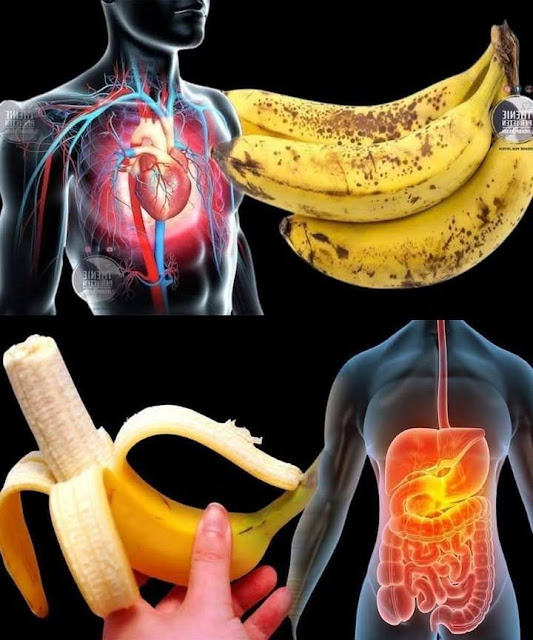
    Did you know that eating bananas boosts your mood?
    They contain tryptophan, which the body uses to make serotonin – the hormone that makes you feel good.

    Suggestion 2: Energy and health
    Did you know that eating bananas boosts your energy levels naturally?
    Thanks to potassium, magnesium and fast carbohydrates, the body gets a stable and long-lasting energy boost.
    See more

    Suggestion 3: For digestion
    Did you know that eating bananas boosts your digestive health?
    They are rich in fiber and prebiotics that support the intestinal flora and calm the stomach.

    Suggestion 4: For training

    Did you know that eating bananas boosts exercise performance?
    The potassium in bananas helps muscles and nerves function better and can reduce cramps.

    If you want, I can make:
    a real clickbait version
    a scientific version
    a fun version
    Just let me know!


  • A woman who was looking for a boyfriend in the internet chats ended up being… See more

    A woman who was looking for a boyfriend in the internet chats ended up being… See more

    A woman who had been openly sharing her hopes of finding a genuine boyfriend in an online group became the center of unexpected attention after her story took an unplanned turn. What began as a simple, hopeful search for companionship soon grew into something much larger, drawing reactions from people who followed her posts. Many felt connected to her journey, admiring her honesty and the courage it takes to express personal hopes in front of strangers.

    As more people noticed her message, she started receiving responses that ranged from supportive comments to surprising offers. Some individuals encouraged her to stay patient and keep her standards high, while others tried to connect with her directly. Yet among the interactions, one particular person stood out, leading her into a situation she never expected. What she believed would be a straightforward attempt to meet someone sincere slowly became more complicated than she imagined.

    Friends within the group began to express concerns after noticing shifts in her tone and the way she talked about the person she connected with. They felt something about the situation didn’t seem quite right, prompting them to look out for her and offer guidance. The online community became increasingly involved, discussing how easily someone with good intentions can be pulled into confusing or uncomfortable scenarios when seeking affection or trust on social platforms.

    In the end, her story became a meaningful reminder about the importance of caution, self-awareness, and supportive communities when interacting online. Many people took her experience as a lesson to be more attentive and mindful when building new connections, especially with people they have never met in person. While her search for companionship didn’t unfold the way she initially hoped, it inspired important conversations about digital safety and the value of surrounding oneself with people who truly care.

  • My Dad Raised Me Alone After My Birth Mother Left Me in His Bike Basket at 3 Months Old – 18 Years Later She Showed up at My Graduation

    My Dad Raised Me Alone After My Birth Mother Left Me in His Bike Basket at 3 Months Old – 18 Years Later She Showed up at My Graduation

    My dad raised me alone after my birth mother abandoned me. On my graduation day, she suddenly appeared in the crowd, pointed at him, and said, “There’s something you need to know about the man you call ‘father.’” The truth left me questioning everything I thought I knew about the man who raised me.

    The most important photo in our house hangs right above the couch. The glass has a thin crack in one corner from when I knocked it off the wall with a foam soccer ball when I was eight.

    Dad stared at it for a second and said, “Well… I survived that day. I can survive this.”

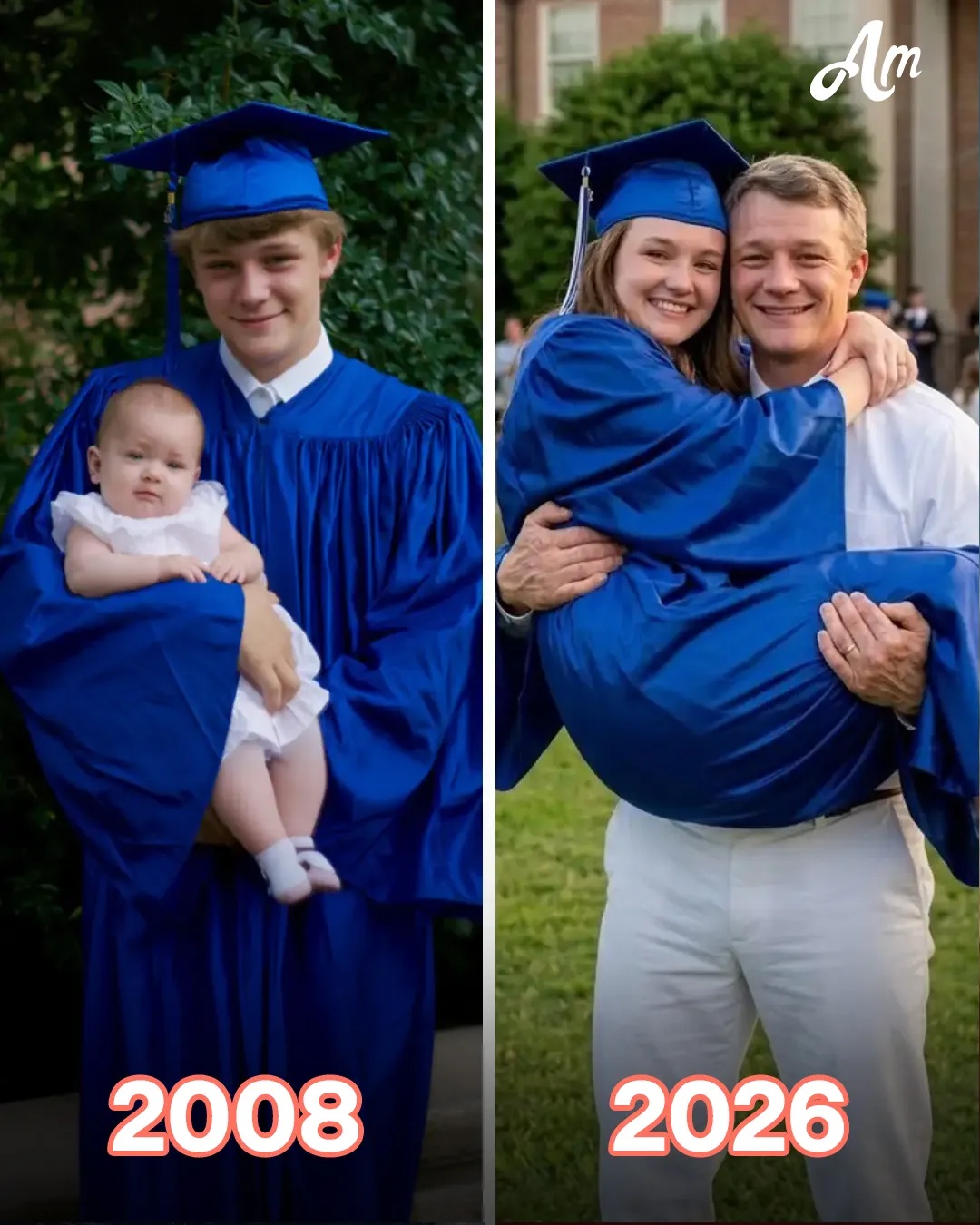
    In the picture, a skinny teenage boy stands on a football field wearing a crooked graduation cap. He looks terrified. In his arms, he holds a baby wrapped in a blanket. Me.

    “WELL… I SURVIVED THAT DAY. I CAN SURVIVE THIS.”

    I used to joke that Dad looked like I might shatter if he breathed wrong.

    “Seriously,” I told him once, pointing at the photo. “You look like you would’ve dropped me out of pure panic if I sneezed.”

    “I would not have dropped you. I was just… nervous. I thought I was going to break you.” Then he gave that little shrug he does when he wants to dodge being emotional. “But apparently I did okay.”

    Dad did more than okay.

    He did everything.

    HE LOOKED LIKE I MIGHT SHATTER IF HE BREATHED WRONG.

    My dad was 17 the night I showed up.

    He came home exhausted after a late shift delivering pizzas and spotted his old bike leaning against the fence outside the house.

    Then he saw the blanket bundled into the basket on the front.

    He thought somebody had dumped trash there.

    Then the blanket moved.

    MY DAD WAS 17 THE NIGHT I SHOWED UP.

    Under it was a baby girl, about three months old, red-faced and furious at the world. There was a note tucked into the folds. She’s yours. I can’t do this.

    ADVERTISEMENT

    That was it.

    Dad said he didn’t know who to call first. His mom was dead, and his father had left years earlier. He was living with his uncle, and they barely spoke unless it was about grades or chores.

    He was just a kid with a part-time job and a bike with a rusty chain.

    Then I started crying.

    SHE’S YOURS. I CAN’T DO THIS.

    He picked me up and never put me down again.

    ADVERTISEMENT

    The next morning was his graduation. Most people would’ve missed it. Most people would’ve panicked, called the police, maybe turned the baby over to social services, and said, “This isn’t my problem.”

    My dad wrapped me tighter in the blanket, grabbed his cap and gown, and walked into that graduation carrying both of us.

    That was when the picture got taken.

    MOST PEOPLE WOULD’VE MISSED IT.

    Dad skipped college to raise me.

    He worked construction in the morning and delivered pizzas at night. He slept in pieces.

    Dad learned how to braid my hair from bad YouTube tutorials when I started kindergarten because I came home crying after another girl asked why my ponytail looked like a broken broom.

    He burned approximately 900 grilled cheese sandwiches during my childhood.

    And somehow, despite all of it, he made sure I never felt like the kid whose mom disappeared.

    DAD SKIPPED COLLEGE TO RAISE ME.

    So when my own graduation day finally came, I didn’t bring a boyfriend. I brought Dad.

    We walked together across the same football field where that old photo had been taken. Dad was trying very hard not to cry. I could tell because his jaw was doing that tight, flexing thing.

    I elbowed him lightly. “You promised you wouldn’t do that.”

    “I’m not crying. It’s allergies.”

    “There is no pollen on a football field.”

    I DIDN’T BRING A BOYFRIEND. I BROUGHT DAD.

    He sniffed. “Emotional pollen.”

    I laughed, and just for a second, everything felt exactly like it was supposed to.

    Then everything went wrong.

    The ceremony had just started when a woman stood up from the crowd. At first, I didn’t think anything of it. Parents were shifting in their seats, waving at their kids, and taking pictures. Normal graduation chaos.

    But she didn’t sit back down.

    A WOMAN STOOD UP FROM THE CROWD.

    She walked straight toward us, and something about the way her gaze moved over my face made the hair on the back of my neck stand up. It was like she was seeing something she’d been searching for a long time.

    She stopped a few feet away.

    “My God,” she whispered. Her voice trembled.

    The woman stared at my face like she was trying to memorize every feature.

    Then she said something that made the entire field go quiet.

    “MY GOD.”

    “Before you celebrate today, there’s something you need to know about the man you call ‘father.’”

    I glanced at Dad. He was looking at the woman in terror.

    “Dad?” I nudged him.

    He didn’t respond.

    The woman pointed at him. “That man is not your father.”

    Gasps rippled through the crowd.

    I glanced from her face to his, trying to understand if that was a joke.

    “THAT MAN IS NOT YOUR FATHER.”

    It felt impossible, like someone had just told me the sky was brown.

    The woman took another step closer. “He stole you from me.”

    Dad seemed to snap out of it then.

    He shook his head. “That’s not true, Liza, and you know it. At least not all of it.”

    “What?” I said.

    Then the whispers grew louder. Parents leaned toward each other. Teachers exchanged confused looks.

    “HE STOLE YOU FROM ME.”

    I wrapped my fingers around Dad’s wrist. “Dad, what is she talking about? Who is she?”

    He looked down at me. His lips parted, but before he could speak, the woman cut in.

    “I’m your mother, and this man has lied to you your entire life!”

    My brain felt like it was trying to run in ten directions at once. My mother was there at my graduation, and everyone was watching us.

    She grabbed my hand. “You belong with me.”

    “DAD, WHAT IS SHE TALKING ABOUT? WHO IS SHE?”

    Instinctively, I pulled back.

    Dad put his arm out in front of me, creating a barrier between my mother and me.

    “You’re not taking her anywhere,” Dad said.

    “You don’t get to decide that,” she snapped.

    “Will someone tell me what’s going on? Dad, please!”

    He looked at me then and hung his head. “I never stole you from her, but she is right about one thing. I’m not your biological father.”

    “YOU DON’T GET TO DECIDE THAT.”

    “What? You… lied to me?”

    “Liza left you with me. Her boyfriend didn’t want the baby, and she was struggling. She asked me to watch you for one night so she could meet him and talk things over.” He paused. “She never came back. He disappeared that night, too. I always assumed they ran off together.”

    “I tried to come back!” Liza cried.

    Who was telling the truth?

    Then a voice rose from somewhere in the stands. “I remember them.”

    “WHAT? YOU… LIED TO ME?”

    Everyone turned.

    One of the older teachers from the school was walking down the steps toward us.

    “You graduated here 18 years ago with a baby in your arms.” She gestured to Dad. Then she nodded at the woman. “And you, Liza, lived next door to him. You dropped out of school before graduation. You disappeared that summer. Along with your boyfriend.”

    The murmuring in the stands grew louder.

    And just like that, the shape of the story shifted.

    I turned back to my dad.

    “YOU GRADUATED HERE 18 YEARS AGO WITH A BABY IN YOUR ARMS.”

    “Why didn’t you tell me?” I asked.

    Dad swallowed hard. “Because I was 17. I didn’t know what I was doing, and I didn’t know how anyone could walk away from a baby. And I thought if you believed at least one parent chose to keep you, it might hurt less.”

    A broken sob escaped me. I wrapped my arms around my midsection.

    “And later?” I whispered. “Why didn’t you tell me when I was older?”

    “After a while, I didn’t know how to tell you something that might make you feel unwanted.” He looked back at me then. “In my heart, you were mine the moment I carried you through that graduation.”

    “WHY DIDN’T YOU TELL ME?”

    “Stop this! You’re making me look bad on purpose,” Liza reached for me again, a wild look in her eyes, “but nothing can change the fact that she doesn’t belong to you.”

    I ducked behind Dad.

    “Stop this, Liza! You’re scaring her. Why are you even here?” Dad asked.

    Liza’s eyes widened. For a moment, she looked fearful. Then she turned to face the crowd, her voice rising.

    “Help me, please. Don’t let him keep my child from me any longer.”

    My child. Not my name, not “daughter,” just a claim.

    “STOP THIS, LIZA! YOU’RE SCARING HER. WHY ARE YOU EVEN HERE?”


    Everyone was talking at once now, but nobody moved forward. Liza stood there a moment longer before she finally seemed to realize that nobody was going to help her take me away from Dad.

    “But I’m her mother,” she said in a small voice.

    “You gave birth to me, Liza.” I stepped sideways and took Dad’s hand. “But he’s the one who stayed. He’s the one who loved me and looked after me.”

    Applause broke out in the crowd.

    My mother’s face went pale, and that’s when she revealed the true reason she’d come for me that day.

    NOBODY WAS GOING TO HELP HER TAKE ME AWAY FROM DAD.

    “You don’t understand!” Tears streamed down her face. “I’m dying.”

    The applause stopped instantly.

    “I have leukemia,” Liza continued. “The doctors say my best chance is a bone marrow match. You’re the only family I have left.”

    Whispers spread through the stands again. Some people looked angry.

    One woman muttered loudly enough that I could hear her: “She has no right to ask that.”

    My mother sank to her knees right there on the grass, in front of everyone, in the middle of my graduation.

    “YOU’RE THE ONLY FAMILY I HAVE LEFT.”

    “Please,” she begged. “I know I don’t deserve it, but I’m begging you to save my life.”

    I looked at my dad. He didn’t answer for me. He never did.

    He just placed a hand on my shoulder. “You don’t owe her anything. But no matter what you decide, I’ll support you.”

    Even then, standing in the ruins of the secret he’d carried for 18 years, he was still making space for me to choose.

    I realized something important then: everything important I’d learned about life came from him, anyway. I never needed him to tell me what to do because he’d been showing me how to live a good life every day.

    “I KNOW I DON’T DESERVE IT, BUT I’M BEGGING YOU TO SAVE MY LIFE.”

    I turned back to my mother. “I’ll get tested.”

    The crowd murmured again. Liza put her hands over her face.

    I squeezed my dad’s hand hard. “Not because you’re my mother, but because he raised me to do the right thing, even when it’s hard.”

    My dad wiped his eyes.

    He didn’t even try to pretend he wasn’t crying that time.

    “HE RAISED ME TO DO THE RIGHT THING, EVEN WHEN IT’S HARD.”

    The principal stepped forward onto the field. “I think, after everything we just witnessed, there’s only one person who should walk this graduate across the stage.”

    The crowd erupted.

    I slipped my arm through my dad’s.

    As we started toward the stage, I leaned closer to him. “You know you’re stuck with me forever, right?”

    He laughed softly. “Best decision I ever made.”

    “THERE’S ONLY ONE PERSON WHO SHOULD WALK THIS GRADUATE ACROSS THE STAGE.”

    Maybe blood matters. Maybe biology leaves fingerprints on a life.

    But I had learned something stronger than that.

    A parent is the one who stays when staying costs everything.

    Eighteen years ago, my dad walked across this field holding me in his arms. Now we walked it together, and everyone watching knew exactly who my real parent was.

    A PARENT IS THE ONE WHO STAYS WHEN STAYING COSTS EVERYTHING.