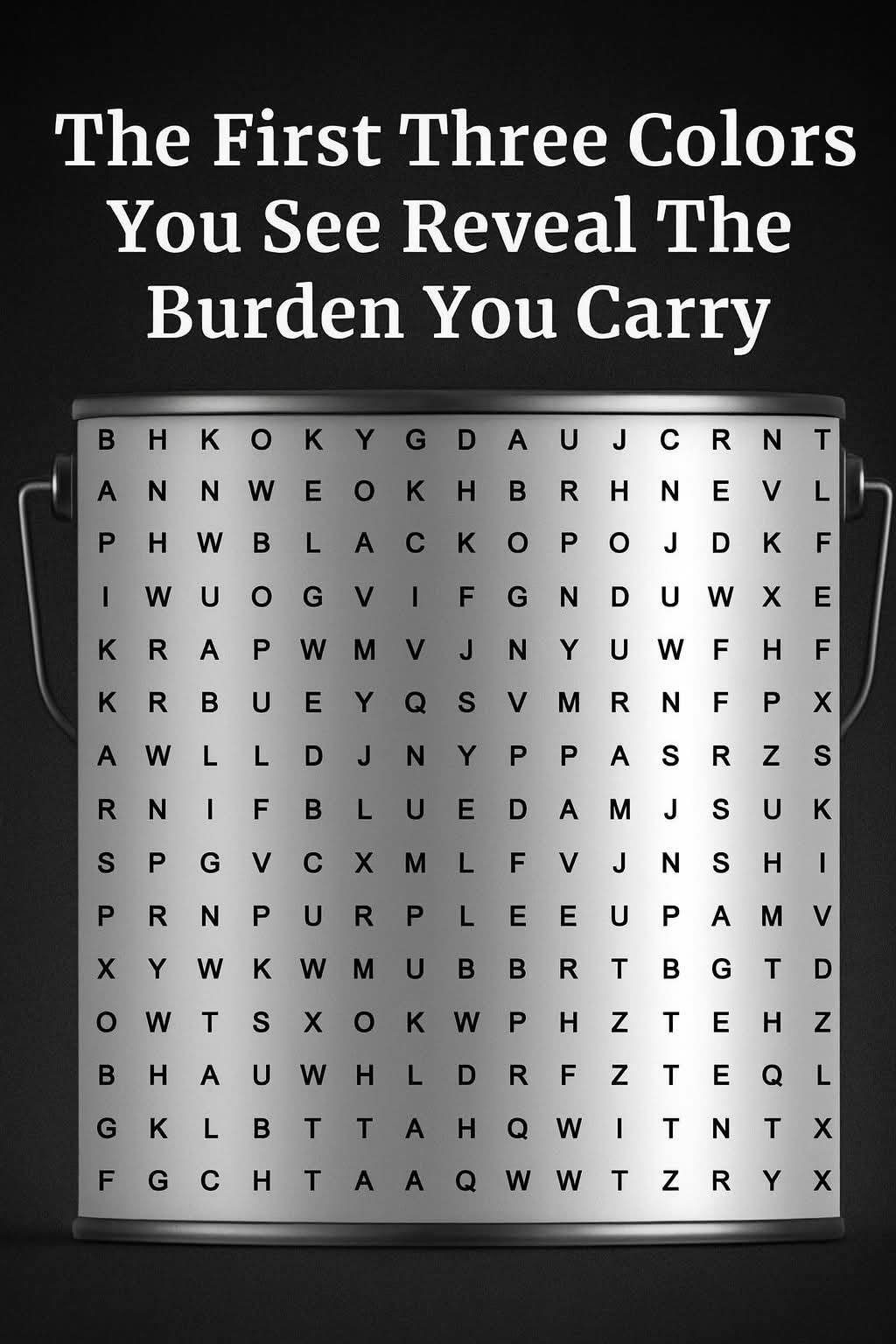
Colors don’t just register with our eyes—they resonate within us. Before we’ve even named an emotion, a hue can strike like a memory, a mood, or a quiet alarm. That’s why the phrase “The first three colors you notice reveal the weight you’re carrying” keeps resurfacing online. It’s not a clinical assessment, and it won’t substitute for real therapeutic work—but as a symbolic exercise, it can be strikingly effective at one thing: making you pause long enough to tune into what’s happening inside.
The concept is straightforward. When you’re shown a vibrant image or asked to quickly name the first three colors you see in your surroundings, your brain isn’t picking randomly. Attention is selective. We’re drawn to what stands out, what feels familiar, what offers safety, or what demands urgency. In that split second, you’re not just observing the world—you’re filtering it. And that filter is where the idea of the “burden” comes in.
Here, “burden” doesn’t necessarily mean trauma or tragedy. It might be stress you’ve grown used to, pressure you bear silently, or resentment you’ve swallowed for years. This little color exercise isn’t meant to diagnose—it’s meant to reflect. If you engage with it honestly—without turning it into a fortune-telling game—you might spot patterns you’ve been overlooking.
Why do colors feel so deeply personal? It’s rooted in how the brain functions. Color perception isn’t purely visual; it’s interpretive. The mind ties color to memory, feeling, and learned associations. Consider how a stark white hospital corridor can instantly tense your shoulders, or how golden lamplight can ease them. Even if you don’t consciously register it, your body responds. That’s part biology, part lived experience.
It’s also shaped by culture. A shade that brings comfort in one place may signal sorrow elsewhere. In many Western societies, white symbolizes purity, weddings, and cleanliness. In parts of Asia, it’s strongly associated with mourning and funerals. Red can mean danger, warning, or “stop” in one context—while in Chinese tradition, it signifies luck, joy, and celebration. So when someone says “red means passion” or “black means grief,” they’re offering a common shorthand, not a universal law.
Yet these associations persist for a reason. Over time, humans have layered emotional meaning onto color because it helps us navigate the world quickly. Marketers use it, artists use it, filmmakers use it—and so do we—every time we choose an outfit to feel confident or invisible on a tough day. Color is a language that skips logic and speaks directly to the nervous system.
So what does this “first three colors” practice actually do? It invites you to catch your raw, unfiltered reaction—the moment before you edit yourself into a “more sensible” answer. It’s a small way of catching yourself in the act of feeling. And that’s often where truth resides.
Below are common symbolic interpretations people reference in these reflections—not as rules, but as starting points.
Red is intensity. It can embody passion, love, drive, and courage. It can also signal anger, impatience, conflict, and a relentless sense of urgency. If red grabs you first, your burden might be emotional heat—feeling like everything hinges on this moment, and slowing down could cause everything to collapse. It may point to someone who’s been holding it together for far too long.
Blue is depth. It can represent calm, loyalty, stability, and emotional awareness. It can also mirror sadness, responsibility, and the silent strain of keeping things steady. If blue catches your eye immediately, your weight may be quiet pressure—absorbing others’ moods, maintaining peace, staying composed while secretly needing support yourself.
Yellow is brightness with an undercurrent. It’s hope, creativity, playfulness, and optimism. But it’s also anxiety, mental chatter, and the pressure to stay cheerful. If yellow surfaces first, your burden might be the performance of joy—feeling obligated to be upbeat even when you’re exhausted or hurting.
Black is armor. It can signify power, boundaries, elegance, and control. It can also point to grief, fear, secrecy, or emotional shielding. If black is among your first picks, you might be holding something heavy you never speak about—or you’ve become so skilled at protecting yourself that vulnerability feels dangerous.
White is order and clarity. It can symbolize peace, new beginnings, and simplicity. It can also suggest perfectionism, emotional avoidance, and a need to keep things “tidy.” If white jumps out at you, your burden may be upholding an image—staying poised, doing everything “correctly,” and feeling unsafe when life gets messy.
Green is growth, healing, and endurance. It can signal renewal, balance, and resilience. It can also connect to envy, comparison, and the stress of constant change. If green stands out, your weight might be transition—rebuilding after loss, trying to move forward while your circumstances keep dragging you back.
Purple often ties to transformation. It can represent intuition, wisdom, imagination, and depth. It can also hint at isolation, feeling unseen, or carrying questions with no easy answers. If purple draws you in, your burden may be emotional complexity—living in your thoughts, holding big feelings, and lacking a simple outlet for them.
Orange is energy. It’s ambition, boldness, excitement, and vibrancy. But it can also point to burnout, chaos, and the pressure to always “show up strong.” If orange appears early, your burden might be constant output—always performing, always producing, always being “on.”
Gray is limbo. It can represent maturity, neutrality, and steadiness. It can also reflect exhaustion, numbness, and uncertainty. If gray shows up quickly, your weight may be emotional fog—going through the motions, struggling to feel deeply, or feeling stuck between paths.
None of these meanings are final judgments. They’re invitations. The real value lies in your response: does the interpretation prick a little? Feel eerily familiar? Annoy you because it’s uncomfortably close to something you’ve been avoiding?
If you want to use this exercise in a meaningful way, keep it grounded. Don’t treat it like destiny. Treat it like a mirror.
Choose your three colors fast—no overanalyzing. Then write one honest sentence for each: what it reminds you of, how it makes you feel, and what it might represent in your life right now. If you journal, go deeper: “What am I carrying that I’ve convinced myself is normal?” If you’re in therapy, bring it up as a conversation starter. If you’re creative, paint it. If not, still use it to name what your body already knows.
Colors won’t fix your problems. But they can help you see them. And sometimes, simply noticing is the first true step toward setting the weight down.