Blog

  • Chaos at White House Correspondents’ Dinner as gunman storms hotel, opens fire outside ballroom and Trump is evacuated

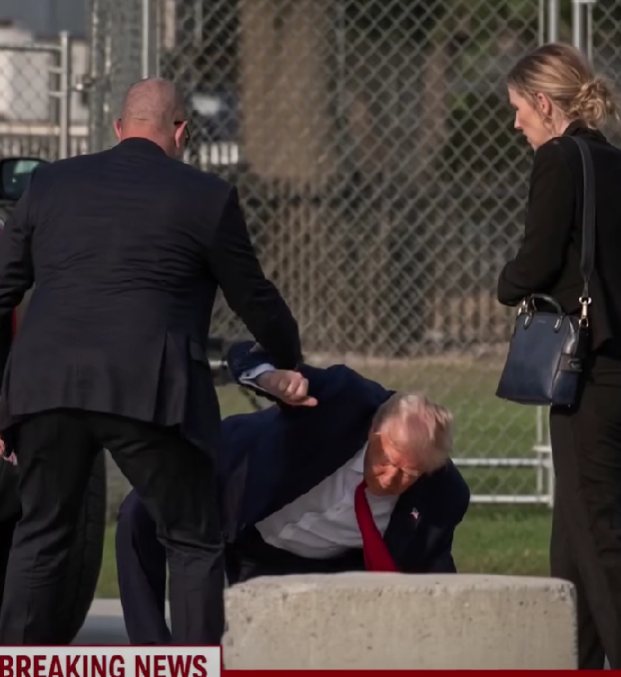
    President Trump, first lady Melania and a slew of top lawmakers and White House officials had to be dramatically evacuated from the White House Correspondents Dinner Saturday  night after a crazed gunman rushed the security perimeter and opened fire outside the ballroom.The shooting erupted just after 8:30 p.m., about 20 minutes after the president and first lady made their grand entrance into the Washington Hilton ballroom in Washington, DC., where Trump and countless VIPS were set to toast the Washington press corps.

    US President Donald Trump and first lady Melania Trump, next to White House Press Secretary Karoline Leavitt, attend the annual White House Correspondents’ Association dinner in Washington, D.C., U.S., April 25, 2026.REUTERSUS President Donald Trump is escorted out as a shooter opens fire during the annual White House Correspondents’ Association dinner in Washington, D.C., U.S., April 25, 2026, in this screen…REUTERS

    “The man has been captured. They’re going to his apartment. I guess he lives in California, and he’s a sick person.” Trump told reporters.

    He also talked about the sense of togetherness he felt among the crowd at the dinner.

    “This was an event dedicated to freedom of speech that was supposed to bring together members of both parties with members of the press, and in a certain way it did, because the fact that they just unified,” Trump said at a White House press briefing.

    “I saw a room that was just totally unified. It was, in one way, very beautiful, a very beautiful thing to see.”

    Officials said the deranged gunman rushed a security checkpoint and was headed toward the president’s location before being stopped outside the ballroom.

    Police believe he was a guest at the hotel.Cole Allen is detained in the lobby of the Hilton where the White House Correspondents’ dinner was held.truthsocial/realDonaldTrumpPresident Trump confirmed that the suspected shooter, Cole Allen, has been captured.C2 Education/Facebook

    “But at this point it does appear he is a lone actor, a lone gunman,” Interim DC police chief Jeffrey Carroll confirmed Saturday night. “There does not appear to be any sort of danger to the public.”

    One Secret Service agent was shot in the chaos. Trump said the agent was hit “from a very close distance with a very powerful gun,” but survived thanks to his bulletproof vest and is in “great shape” at a local hospital.

    Organizers of the star-studded “nerd prom” program originally said that they wanted continue as planned; but then announced that the event was canceled by 9:45 p.m.Secret service agents respond during the White House Correspondents Dinner.AP

    It will be rescheduled within 30 days, Trump said, noting he “fought like hell” to keep the event going as he was ready to tear into the press.

    He also praised law enforcement and Secret Service for doing a “fantastic job” and acting “very quickly.”

  • “This picture was taken only 21km from our house by my brother — any ideas what we’re looking at?”

    There are certain moments in life when an ordinary scene suddenly captures people’s attention in an extraordinary way. Sometimes it happens through a sunset, an unusual cloud formation, or a photograph taken at exactly the right second. In today’s digital world, images can travel across the internet within minutes, reaching thousands of people who each interpret them differently. One such image recently sparked widespread discussion online after a man from Italy shared a photograph that many viewers believed resembled the famous Christ the Redeemer statue overlooking Rio de Janeiro, Brazil.

    The photograph was reportedly taken near the Tyrrhenian Sea during calm weather conditions. According to the story shared online, the image was captured by Alfredo Lo Grossa, who noticed a striking shape appearing among the clouds and sunlight above the water. What initially seemed like a simple photograph quickly gained attention after being posted on social media, where viewers began debating what exactly they were seeing in the sky.

    Some people immediately compared the image to the world-famous Christ the Redeemer statue in Brazil. Others believed the shape looked like a human figure with outstretched arms appearing above the horizon. As the image spread online, reactions became increasingly emotional and symbolic. Many users described the photograph as peaceful, comforting, or spiritually meaningful, while others viewed it simply as a fascinating natural coincidence caused by light, clouds, and perspective.

    The original Christ the Redeemer statue remains one of the most recognized monuments in the world. Located in Rio de Janeiro, the massive statue stands approximately 30 meters tall atop Mount Corcovado and has become an international symbol of faith, culture, and Brazilian identity. Because of its instantly recognizable silhouette, many people naturally associate similar shapes or outlines with the monument whenever they appear in nature, photography, or art.

    This psychological tendency is well known and completely natural.

    Human beings are wired to recognize familiar patterns, especially faces, human figures, or meaningful symbols. Scientists often refer to this phenomenon as “pareidolia,” a process where the brain interprets random visual information as recognizable images. It explains why people sometimes see shapes resembling animals in clouds, faces in rock formations, or recognizable figures in shadows and reflections. The experience can feel deeply personal even when the image itself is created entirely through natural conditions.

    In the case of Alfredo’s photograph, weather and lighting likely played a major role in creating the striking appearance that captured public attention. Sunlight reflecting through clouds above the sea can produce dramatic visual effects, especially during sunrise or sunset when angles of light become softer and more atmospheric. Combined with shifting cloud formations and perspective from the camera, these natural elements can sometimes align in ways that strongly resemble familiar figures or objects.

    However, what made this image especially powerful was not simply the shape itself, but the emotional reaction people had to it.

    Social media users from different countries began sharing personal interpretations almost immediately. Some viewers described the image as inspiring or spiritually comforting during difficult times in their lives. Others viewed it as a reminder of hope, faith, or peace. At the same time, many people approached the image from a scientific or photographic perspective, emphasizing the role of weather conditions, visual perception, and coincidence.

    Importantly, there is no verified evidence suggesting the image represents anything supernatural or miraculous. Experts generally explain these kinds of photographs through natural atmospheric effects and the human brain’s tendency to search for recognizable forms. Still, the emotional impact of such images can remain meaningful to people regardless of scientific explanations.

    That balance between science and personal interpretation is part of what makes moments like this so fascinating.

    Throughout history, people have often attached symbolic meaning to unusual natural events. Ancient civilizations interpreted eclipses, comets, storms, and celestial patterns as messages or signs because they lacked modern scientific understanding of those phenomena. Even today, despite advances in technology and science, people still search for emotional meaning in unexpected moments found in nature.

    Another reason the image attracted attention is because the sea itself often creates an emotional atmosphere in photography. Large open water combined with dramatic skies naturally evokes reflection and imagination. The Tyrrhenian Sea, located along the western coast of Italy, is known for beautiful coastal views, changing weather patterns, and sunsets that frequently produce striking colors across the horizon. Under the right conditions, the interaction between clouds, sunlight, and ocean mist can create images that appear almost surreal.

    Professional photographers often spend years studying these exact conditions.

    Timing, camera angle, cloud density, and natural lighting all influence how an image appears. A slight movement of the sun or change in cloud position can completely alter the visual effect within seconds. Because of this, many extraordinary photographs are less about digital editing or manipulation and more about patience, observation, and being present during a rare natural alignment.

    As online discussions surrounding the photograph continued growing, reactions became increasingly divided between emotional interpretation and rational explanation. Some viewers insisted the image carried spiritual significance, while others argued it should simply be appreciated as an example of nature’s ability to create visually powerful scenes without supernatural meaning attached.

    Both perspectives reveal something important about human nature.

    People naturally search for meaning in moments that surprise them. When an image appears unusually beautiful or emotionally striking, it often encourages deeper reflection about life, faith, coincidence, or the mysteries of the world. Even individuals who approach such moments scientifically may still appreciate the emotional response they create.

    The photograph also demonstrates how quickly social media can transform an ordinary moment into a global conversation. Years ago, an unusual image captured near a local coastline may have remained private among friends or family members. Today, a single photograph can circulate internationally within hours, generating thousands of comments, debates, and emotional reactions from people who have never met each other.

    This rapid sharing changes the way stories are experienced.

    Images become more than personal memories; they become public discussions shaped by collective interpretation. Every viewer brings personal beliefs, emotions, and experiences into what they see. As a result, the same photograph can inspire faith in one person, curiosity in another, and skepticism in someone else entirely.

    What remains undeniable is that the image succeeded in making people pause.

    In a fast-moving world filled with constant distractions, moments that encourage reflection have become increasingly rare. Whether viewers interpreted the photograph spiritually, scientifically, or artistically, many people spent time genuinely thinking about it. They looked closer, discussed possibilities, and shared perspectives with others. That alone gives the image a certain value beyond the visual effect itself.

    At the same time, it is important to approach such stories responsibly and avoid presenting personal interpretations as confirmed facts. While some social media posts may describe the photograph using dramatic language suggesting miracles or supernatural events, there is no verified evidence supporting those claims. The most reasonable explanation remains a combination of atmospheric conditions, cloud formations, perspective, and human visual perception.

    Still, understanding the science behind an image does not necessarily remove its emotional impact.

    Nature has always inspired awe precisely because it can create moments that appear larger than ordinary life. Sunsets, storms, mountains, oceans, and unusual skies often leave lasting emotional impressions even when fully explainable through science. Appreciating those moments does not require rejecting logic or evidence. In many cases, the beauty comes from realizing how extraordinary the natural world already is on its own.

    For Alfredo Lo Grossa, what began as a simple photograph near the sea unexpectedly became part of a much larger public conversation. Whether he intended it or not, his image encouraged people around the world to pause for a moment and think about perception, meaning, and the way human beings connect emotion to visual experiences.

    Some viewers saw faith.

    Others saw coincidence.

    Many simply saw beauty.

    And perhaps that is why the photograph continues attracting attention online. Not because it proves anything supernatural, but because it reminds people that even ordinary moments can sometimes feel extraordinary when viewed through the lens of wonder, emotion, and imagination.

    In the end, the image says as much about people as it does about the sky itself. Human beings naturally search for meaning, patterns, and connection in the world around them. Sometimes that search leads to science, sometimes to spirituality, and sometimes simply to appreciation for a rare and beautiful moment captured at exactly the right time.


  • Epstein Exchanged Emails With Former Lawyer For Barack Obama

    Epstein Exchanged Emails With Former Lawyer For Barack Obama

    The trove of more than 20,000 pages of emails handed to the House Oversight Committee sketches a world where Jeffrey Epstein moved effortlessly through Democratic power circles, even as his reputation darkened. In one 2016 message, he vents that he cut off Bill Clinton after catching the former president contradicting himself with “whole-hearted conviction” only weeks apart. Clinton’s team now insists this proves their distance from Epstein, stressing he knew “nothing” of the financier’s crimes and hadn’t spoken to him in decades.

    Yet other messages and records blur that clean break. Epstein appears in discussions about a “men of the world” conference with Clinton and other tarnished figures, while logs and flight records confirm years of contact, donations, and shared travel. Kathryn Ruemmler’s friendly exchanges with Epstein, and her later rise to Goldman Sachs, underscore how deeply he was embedded in elite networks that long preferred not to ask, or answer, too many questions.


  • Tel Aviv 10 minutes ago…. Izraeli’s president is confir….see. more

    Multiple strikes have been reported from Iran in the past few minutes, and officials say they are awaiting a significant response from both the United States and Israel.

    9 Killed in Beit Shemesh Following Latest Iranian Missile Barrage

    Israel’s president has just confirmed ongoing developments as the situation rapidly unfolds.

    Multiple strikes have been reported from Iran in the past few minutes, and officials say they are awaiting a significant response from both the United States and Israel.

    9 Killed in Beit Shemesh Following Latest Iranian Missile Barrage

    Israel’s president has just confirmed ongoing developments as the situation rapidly unfolds.

  • Late-Night Sighting: Trump Spotted With Mysterious Item

    Late-Night Sighting: Trump Spotted With Mysterious Item

    …suffocated by the sheer velocity of speculation. As the images circulated, the late-night sighting ceased to be about a man on a walk and transformed into something far more profound: a mirror reflecting the fractured psyche of a country staring back at itself. That small, unidentified object became a Rorschach test for the American experience, projecting every deep-seated anxiety, political fantasy, and hidden hope onto a grainy, low-light frame.

    For the skeptics, the object was a symbol of impending danger, a harbinger of some calculated, behind-the-scenes maneuver. For the loyalists, it was a sign of quiet strategy, a piece of a larger, unseen puzzle being assembled in the dead of night. The object itself never changed—its shape remained static, its purpose unknown—but the stories wrapped around it grew with every share, every click, and every inflammatory headline. In the vacuum where facts should have lived, imagination rushed in, weaponized by algorithms that favor outrage over clarity.

    This incident serves as a stark reminder of how quickly we surrender our collective sanity to the spectacle. We have become a society that treats every shadow as a conspiracy and every quiet moment as a calculated performance. We are so eager to believe that there is always something more, something darker, or something more significant hiding in the periphery that we lose sight of the mundane reality of human existence.

    What lingers long after the initial shock has faded is not the mystery of what was held in that hand, but the speed with which we abandoned the truth in favor of the narrative. We chose the thrill of the hunt over the dignity of the known. In the end, the mystery was never about the man or the metal; it was about our own desperate need to believe that the world is a stage where nothing is ever truly what it seems. We are the architects of our own confusion, proving once again that we would rather be entertained by a phantom than grounded by the truth.

  • ‘American Star’ Music Executive and Husband Found Dead in Tragic Incident

    ‘American Star’ Music Executive and Husband Found Dead in Tragic Incident

    The entertainment world is reeling after news broke of a tragic incident involving a well-known music executive and her husband. Authorities in Los Angeles responded to a welfare check at a home in Encino earlier this week, where they discovered the couple had died under violent circumstances.

    Neighbors and colleagues expressed shock, describing the pair as warm, talented, and deeply committed to their careers in the music industry. Police reports indicate that responding officers noticed blood near the front door upon arrival. When attempts to make contact with anyone inside failed, officers gained entry by breaking a window.

    Inside, they found both individuals deceased, with preliminary indications pointing to gunshot wounds. The Los Angeles Police Department has launched a full investigation into the events leading up to the deaths, treating the case as a possible double homicide. The couple’s passing has sent ripples through the music and entertainment communities.

    Tributes began pouring in from colleagues who admired their dedication, professionalism, and influence behind the scenes. Friends recall their generosity, creativity, and the ways they supported artists and projects, often without seeking the spotlight. Social media has been filled with messages of sorrow, remembrance, and calls for answers as authorities continue their investigation.

    The victims were Robin Kaye, the acclaimed music supervisor known for her work on “American Star,” and her husband, Thomas Deluca. Robin’s career spanned decades, during which she helped shape the careers of numerous artists and contributed significantly to the success of high-profile music projects.

    The tragic loss of Robin and Thomas is being felt by family, friends, and the wider music community, leaving a void that will be deeply felt for years to come.


  • Couple adopts child and when coming home with the baby he ate… See more

    Couple adopts child and when coming home with the baby he ate… See more

    heartwarming story has taken an unexpected and shocking turn after a couple adopted a child and brought him home for the first time. What was meant to be a joyful beginning of a new chapter quickly turned into a moment no one could have imagined. The couple had just completed the adoption process and were overjoyed to finally welcome the baby into their family — but what happened next left them speechless.

    heartwarming story has taken an unexpected and shocking turn after a couple adopted a child and brought him home for the first time. What was meant to be a joyful beginning of a new chapter quickly turned into a moment no one could have imagined. The couple had just completed the adoption process and were overjoyed to finally welcome the baby into their family — but what happened next left them speechless.

    Neighbors who heard the commotion were left stunned, unsure of what exactly had happened inside the home. Authorities were later called to ensure the safety and well-being of everyone involved. As news spread, people began speculating about the bizarre event, trying to understand how such a situation could unfold so suddenly after what was supposed to be a happy moment.

    Officials have not released full details, but the story continues to spark intense reactions across social media. What began as a beautiful act of love and compassion has now become a mystery that has everyone asking the same question — what really happened when the couple brought the baby home?


  • I Married a Blind Man So He’d Never See My Scars – On Our Wedding Night, He Said, ‘You Need to Know the Truth I’ve Been Hiding for 20 Years’

    I Married a Blind Man So He’d Never See My Scars – On Our Wedding Night, He Said, ‘You Need to Know the Truth I’ve Been Hiding for 20 Years’

    I married a blind man because I believed he would never have to see the parts of me the world had spent years staring at. Then, on our wedding night, he traced the burn scars on my skin, called me beautiful, and confessed something that shattered every piece of safety I thought I had finally found.

    The morning of my wedding, my sister cried before I did.

    Lorie stood behind me in the church dressing room with both hands pressed over her mouth, staring at my reflection like she could still see the 13-year-old girl I used to be beneath the lace and carefully applied makeup.

    My dress was ivory with long sleeves and a high neckline, chosen as much for concealment as elegance, though Lorie kept insisting it was gorgeous until I finally allowed the word to exist in the room without arguing against it.

    “You look beautiful, Merry,” she whispered, tears sliding down her cheeks.

    Beautiful. That word still catches somewhere inside me. When I was 13, I heard a very different word while lying in a hospital bed with half my face burned and every breath feeling borrowed.

    An officer told me a neighbor must have mishandled gas. That was what caused the explosion. He said I was “lucky” to survive.

    Lucky meant waking up alive inside a body I no longer recognized. It meant children whispering at school and adults staring at me with soft pity that somehow hurt even worse.

    Our parents were already gone by then. Our aunt raised us for a while, and then she passed too, leaving 18-year-old Lorie to step into a life she never asked for and become everything for me at once. She was the one who ran beside the ambulance that day and sat through every quiet humiliation of my recovery.

    My sister stood in front of me on my wedding day and asked softly, “Are you ready?”

    I wiped my eyes and nodded. Then I walked toward the man who changed my life.

    I met Callahan in the basement of the same church where we were getting married.

    He taught piano there three afternoons a week to children who always counted wrong and sang louder than they played. The first time I heard him, he was correcting a little boy’s timing with more patience than I had ever heard in a man’s voice.

    “Again,” Callahan told the child gently. “Slower this time, pal. The song isn’t running away from you!”

    I smiled before I even saw him.

    He sat at the upright piano wearing dark glasses, one hand resting lightly on the keys while the other scratched behind the ears of the golden dog stretched beside him. Buddy wore a harness and the deeply patient expression of a creature who already understood everything about life.

    By then, I was 30 years old and had barely dated anyone seriously. The men I met only saw my scars. Eventually, I became exhausted by those looks.

    Nobody seemed willing to look long enough to find my heart. They only saw damaged goods.

    But Callahan was different. Even without sight, he saw me.

    On our first date, I looked down at the diner table and quietly said, “I should tell you something, Callie. I don’t look like other women.”

    He smiled and reached across the booth for my hand. “Good. I’ve never been interested in ordinary things.”

    I laughed so hard I nearly cried. Maybe that should have warned me.

    By the time Lorie placed my hand into his at the altar, all those tender memories already had tears in my eyes.

    Callahan stood there with Buddy beside him wearing a black bow tie one of his students had insisted on choosing. Those same students were supposed to perform a love song while I walked down the aisle. What they actually produced was a brave, uneven version of one, overflowing with missed notes and determined effort. It was terrible in the sweetest possible way.

    When the pastor asked whether I took Callahan as my husband, I answered yes before he even finished speaking.

    Afterward there were hugs, inexpensive cake, paper cups of punch, children running beneath folding tables, and Lorie pretending not to wipe her eyes every time she looked at me.

    For once, I was not the scarred woman everyone politely tried not to notice. I was the bride.

    Lorie drove us back to Callahan’s apartment after sunset. Buddy padded inside first, exhausted from too much attention, and collapsed near the bedroom doorway with the heavy sigh of a dog who had completed every duty expected of him.

    My sister hugged me tightly at the door. “You deserve this, Merry,” she whispered. “I’m so happy for you, love.”

    Then she left, and suddenly it was only my husband and me, with the first quiet moments of marriage settling around us.

    I guided Callahan toward the bedroom by the hand. When we reached the edge of the bed, he turned toward me, and I felt more nervous than I had walking down the aisle.

    Not because he could see me.

    Because he couldn’t.

    Part of me had always believed Callahan’s blindness made me possible—that with him, I would never again have to watch recognition flash across a man’s face and wonder whether love had survived the first real look.

    He slowly lifted one hand. “Merritt… can I?”

    I nodded.

    His fingers found my cheek first, then the scarred line along my jaw, then the raised ridges across my throat above the lace. Instinct almost made me stop him. Years of hiding do not disappear simply because one person is gentle. But Callahan moved with such care that I let him continue.

    “You’re beautiful,” he whispered.

    That sentence shattered me. I cried against his shoulder so hard I could barely breathe, because for the first time in my adult life, I felt seen without being watched. I felt safe inside someone’s arms.

    Then Callahan stiffened slightly and quietly said, “I need to tell you something that’s going to completely change how you see me. You deserve to know the truth I’ve hidden for 20 years.”

    I laughed weakly through tears. “What? Can you actually see?”

    Callahan didn’t laugh.

    He simply took both my hands into his.

    “Do you remember the kitchen explosion?” he asked softly. “The one you barely survived?”

    Everything inside me froze.

    I had never told him about the kitchen explosion. I had only told him I carried scars from an accident when I was young, and even that confession took weeks. The rest of it lived inside a locked room I had never once opened for him.

    I pulled my hands away. “H-how do you know that?”

    Callahan turned slightly toward me. “Because there’s something you don’t know.”

    A chill moved through my body. “What are you talking about?”

    He removed his glasses. For one terrifying second, I thought he was about to confess he could see—that every part of our relationship had been built on a lie.

    But then he looked directly toward my voice and slightly beyond it, and I understood. He wasn’t looking at me.

    He was staring into darkness.

    “I was there that afternoon, Merry,” Callahan whispered at last.

    I sat down heavily on the bed because my legs no longer felt reliable.

    “I was 16,” he continued quietly. “My friends and I had gone to visit Mike. He lived two houses down from you.”

    I recognized the name immediately. Mike had been our neighbor’s son, the one who blasted loud music through thin apartment walls.

    “We were stupid boys doing reckless things we didn’t truly understand,” Callahan admitted.

    He told me they had been fooling around behind the building, siphoning gas, daring each other, showing off with the careless arrogance teenage boys often carry. Then one bad decision became a spark, and a leak nobody respected became something impossible to stop.

    All the boys ran.

    Every one of them.

    Mike’s family moved away not long afterward. Callahan stayed and saw my name in a newspaper days later.

    “A girl named Merritt survived with severe scarring,” he said softly, repeating the words he had read all those years ago. “That stayed with me.”

    A few months later came the car crash that killed Callahan’s parents, his brother, and his sight. For 20 years, he carried the guilt completely alone.

    I sat there crying before I even realized tears had started falling. My wedding night had split open into a room crowded with ghosts I never invited inside.

    “Why didn’t you tell me earlier?” I asked.

    Callahan gave a hollow laugh. “At first, I wasn’t certain it was you. Then you told me your name, and I got scared.”

    He confirmed his suspicion through a friend. The woman he loved was the girl from the explosion. He tried to walk away. He couldn’t.

    “I kept thinking if I told you too early, you’d leave before I had the chance to love you properly, Merry.”

    “You stole my choice,” I whispered.

    Callahan lowered his head.

    “You let me marry you without telling me what you knew,” I snapped. “What you did.”

    “I know.”

    That was the unbearable part. He wasn’t hiding behind excuses. He knew exactly how deeply this truth would cut through me, and he still waited until vows and rings tied us together before confessing it.

    Part of me wanted to scream at him. Another part still wanted to reach for him, because he was the same man who had called me beautiful five minutes earlier, and the contradiction split me right down the middle.

    “I need air,” I whispered.

    Callahan offered to sleep in the guest room. I barely heard him. I grabbed my coat and left with tears pouring down my face, a bride walking alone through the freezing night with wedding pins still in her hair and her entire life unraveling beneath lace.

    I ended up outside my childhood home. The house still stood, though empty now. I called Lorie from the curb because sometimes only the person who knew you before the scars can hold what comes after them.

    She arrived within ten minutes. One glance at me and she knew something was terribly wrong.

    “Part of me wants to hate him,” I admitted after explaining everything. “But another part can’t forget the way he made me feel seen.”

    Lorie wrapped her arms around me and said nothing, because nothing would have been enough. Then she drove me back to her apartment.

    I spent the night on her couch barely sleeping. By morning, I knew one thing clearly: running from truth had already stolen too much from my life. I wasn’t going to let it steal this decision too.

    I dressed in old jeans and a sweater borrowed from Lorie’s closet.

    She watched me pull on my shoes. “Are you sure?”

    “No,” I admitted. “But I’m going anyway.”

    She smiled through wet eyes. “I’m proud of you.”

    I walked to Callahan’s apartment because I needed cold air and time to think. Buddy heard me first, his paws scrambling across the floor before I even reached the top stair. The moment I opened the door, he nearly knocked me over with relief.

    My husband stood in the kitchen. He turned his head the instant I stepped inside.

    “Merry, you came back!”

    “How did you know it was me?” I asked.

    A sad smile touched his face. “Buddy knew first. My heart knew second.”

    He stepped forward carefully, one hand reaching slightly ahead of him. He almost misjudged the rug. Before thinking, I reached out and caught his wrist. Callahan went still beneath my touch. Then, gently, he found my face again.

    You’re the most beautiful woman I’ve ever known, Merry.”

    The honesty in those words hit harder than any apology ever could.

    Then I caught the faint smell of something burning and looked past him toward the stove.

    “Callie! Are you burning something?”

    He frowned. “No.”

    The omelet in the pan was turning black. I laughed so hard I had to lean against the counter, and Buddy began barking like joy had a sound he recognized. Callahan laughed too then—the first real laugh since the night before.

    “The kitchen,” I said through tears and laughter, “belongs to me now.”

    That became my first official decision as a married woman.

    Buddy stretched out beneath the table like a witness at peace negotiations and wagged his tail every time either of us laughed.

    For the first time in years, I no longer feel ashamed of my scars.

    I finally understand that what happened to me was never my fault. And the one person who knew the ugliest truth attached to it still looked at me, through nothing but darkness, and found something worth loving.

  • I Gave Birth at 17 and My Parents Took Him Away – 21 Years Later, My New Neighbor Looked Exactly Like My Child

    I Gave Birth at 17 and My Parents Took Him Away – 21 Years Later, My New Neighbor Looked Exactly Like My Child

    He said it casually, almost like a joke he wasn’t fully ready to land.

    “Mom is too much now, but coffee works.”

    And somehow, that one sentence held more weight than everything that came before it.

    The Life I Thought I Understood

    For most of my life, I believed I had already lived through the worst thing my parents could do to me.

    I thought the lie ended when I was seventeen—when I was sent away, alone, and told my baby had died.

    I built my entire adult life around that grief.

    A quiet house. A structured routine. A careful way of thinking that avoided looking too closely at anything that might reopen that wound. Even when my father moved into my guest room, fragile and aging, I kept things contained. Manageable.

    From the outside, everything looked settled.

    Inside, something had always been unresolved.

    I just didn’t know how close the truth really was.


    The Moment Everything Shifted

    It started with something ordinary—a moving truck next door, a new neighbor, a brief introduction.

    His name was Miles.

    There was something about him I couldn’t ignore. Not just resemblance, though that was there in unsettling ways. It was recognition, the kind that doesn’t ask for permission before settling in your chest.

    Still, I told myself what anyone would:

    You’re imagining it.

    Until I wasn’t.


    The Blanket That Was Never Burned

    When I stepped into his house a few days later, nothing dramatic happened at first.

    Just small talk. A half-finished kitchen. Coffee brewing somewhere.

    Then I saw it.

    An armchair by the window.

    And draped across it—a small knitted blanket.

    Blue wool. Yellow birds stitched into the corners.

    Mine.

    The one I had hidden. The one I had given away with a single note. The one my mother told me she burned.

    That was the moment everything cracked open.

    The Truth That Had Been Buried

    Miles told the story the way he had always known it.

    Adopted at three days old. A blanket left with him. A note that read:

    “Tell him he was loved.”

    I didn’t need anything else.

    Not proof. Not confirmation.

    I knew.

    And when my father finally spoke, the truth came out in fragments that felt almost too heavy to exist in the same room.

    My mother hadn’t lost my child.

    She had taken him.

    Arranged an adoption. Told the clinic staff just enough to create silence. Used the fact that I was a minor to control everything.

    And then she let me grieve a child who was alive.

    For twenty-one years.

    The Weight of What Was Stolen

    There’s no clean way to process something like that.

    It’s not just betrayal. It’s not just loss.

    It’s time.

    Twenty-one years of it.

    Every birthday I never celebrated. Every question I never asked. Every version of myself I built around a lie.

    And yet, sitting across from me was not just the past.

    It was a person.

    A man who had lived an entire life without knowing the truth, just as I had.


    A Beginning Without a Script

    We didn’t rush anything.

    There was no dramatic reunion, no immediate certainty about what we were to each other.

    There were questions. Long pauses. Careful words.

    A DNA test is still ahead.

    But some things don’t wait for paperwork.

    When he asked if I had made the blanket, I said yes.

    When he ran his thumb over the yellow birds and said he’d wondered his whole life who made it—that was enough to shift something real between us.

    Not complete.

    Not simple.

    But real.


    What Comes After Truth

    The conversations since then haven’t been easy.

    There’s anger. There’s grief. There’s confusion that doesn’t resolve overnight.

    My father remains in the background now, a quiet reminder of what silence can cost.

    But there’s also something new.

    Something fragile, but steady.

    Miles shows up with coffee.

    We talk in pieces, not all at once. Sometimes about the past, sometimes about nothing at all.

    We’re not forcing a relationship into a shape it isn’t ready for.

    We’re letting it exist as it is.


    Where We Are Now

    Yesterday, he stood in my kitchen holding two cups and said:

    “Mom is too much now, but coffee works.”

    It wasn’t perfect.

    It wasn’t a declaration.

    But it was honest.

    And after twenty-one years of living inside a lie, honesty—no matter how small—feels like something worth holding onto.

    For now, that’s enough.

    For now, coffee works.

  • Food Stamp Program Changes You Need to Know About This.

    Food Stamp Program Changes You Need to Know About This.

    Newt Gingrich Raises Concerns About Congressional Tone and Public Trust

    Former House Speaker Newt Gingrich recently commented on what he views as a growing problem in Congress—an increasingly rigid tone that leaves little room for shared moments or cooperation. Speaking about a recent joint session, he suggested that some members of the United States House of Representatives appeared disengaged even during points meant to bring unity, interpreting it as a sign of deeper division.

    “They couldn’t applaud anything,” Gingrich said, describing what he believes is a pattern where partisan instincts are beginning to outweigh the willingness to acknowledge common ground.

    A Broader Concern Beyond One Party

    Gingrich also pointed to polling from his research group, noting that many Americans express distrust toward the political system. While he framed part of the issue through a partisan lens—arguing that Republicans are focusing on reform while Democrats may be more aligned with existing institutional structures—the underlying concern he raised reaches further than party lines.

    Public confidence in government has been strained for years, shaped by repeated cycles of conflict, unmet expectations, and the perception that political positioning often comes before practical solutions.


    Where the Real Challenge Lies

    Even for those who may not agree with Gingrich’s conclusions, the central issue remains: how to restore a sense that leadership is grounded in responsibility rather than reaction.

    • Voters want consistency, not just messaging
    • They want disagreement handled with clarity, not performance
    • They want decisions that reflect long-term benefit, not short-term advantage

    These are not partisan goals—they are expectations tied to the role of public service itself.


    Moving Forward Without Escalation

    Rebuilding trust doesn’t happen through louder criticism or sharper division. It tends to come through steadier actions:

    • Acknowledging valid points across the aisle without losing one’s position
    • Prioritizing outcomes that are measurable and transparent
    • Maintaining a tone that reflects responsibility, even in disagreement

    These steps don’t resolve every conflict, but they reduce the distance between leadership and the people watching it.

    Final Thought

    Moments like this often reveal more than they resolve. They show where communication has become strained and where expectations remain unmet.

    Whether one agrees with Gingrich or not, the question he raises is worth considering quietly:
    What kind of conduct actually rebuilds trust—and who is willing to carry it consistently?